Internal resistance is one of the parameters that indicate a battery's ability to carry current. When the value of internal resistance is low, the battery is able to carry a significant amount of current. On the other hand, a battery with high internal resistance can only carry a small amount of current.
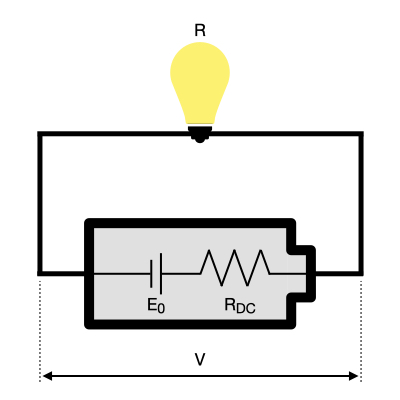
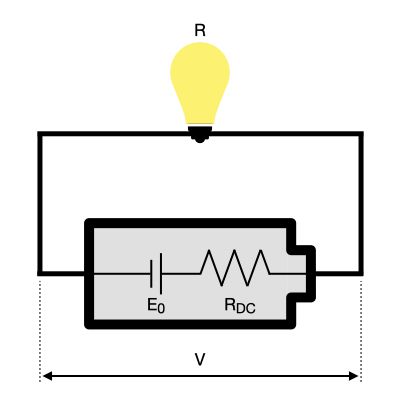
Fig.1 shows an example of the internal configuration of a battery. Ideally, a battery's internal resistance should be zero, allowing for maximum current flow without any energy loss. In reality, however, as illustrated in Fig.1, internal resistance is always present.
Let's consider an example to illustrate this. The battery voltage is determined by the internal resistance and the output current. Suppose we have a battery electromotive force of E0=10 V. When the battery's internal resistance, RDC, is 1 Ω, and the load, R, is 9 Ω, the battery outputs a voltage of 9 V. However, if the internal resistance increases to 2 Ω, the output voltage drops to approximately 8.2 V.
In summary, internal resistance influences a battery's current-carrying capacity. The higher the internal resistance, the greater the energy loss, which is converted into "heat." This heat not only represents energy wastage but also contributes to the degradation of the battery.
The first reason for measuring internal resistance is to ensure quality control throughout production. It is possible to determine the quality of a battery by measuring its internal resistance.
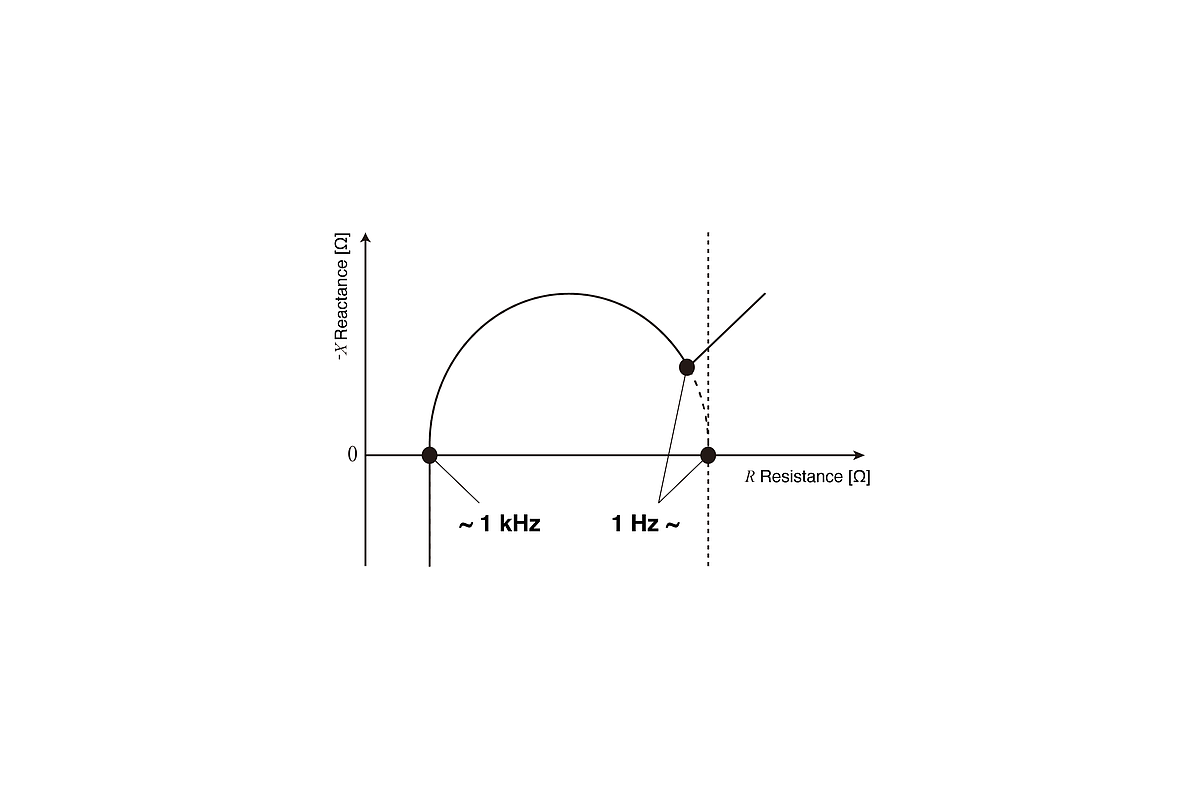
However, how many ohms of internal resistance would be considered a high-quality battery? Well, it depends on the type of battery. As shown in Fig. 2, depending on the material, structure, size, voltage, and other factors, different types of batteries have varied internal resistance levels. Fig. 3 illustrates how some batteries have several mΩ, while others have over 1 kΩ of internal resistance.


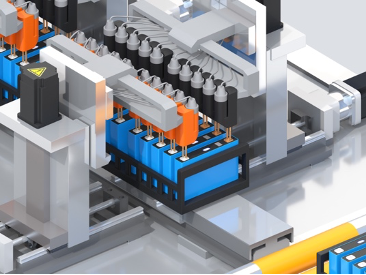
Determination using internal resistance allows a consistent battery quality that meets the specifications. It plays an important role in maintaining the quality of a battery during production
Determination using internal resistance allows a consistent battery quality that meets the specifications. It plays an important role in maintaining the quality of a battery during production
Determination using internal resistance allows a consistent battery quality that meets the specifications. It plays an important role in maintaining the quality of a battery during production